My camera bag is really a system of bags. The Pelican holds the larger protected loadout, my Peak Design backpack carries the work-and-travel kit, and the ALPAKA keeps the things I need within reach. For a day devoted entirely to drone work, I add a very specific Domke setup.
The contents shift with the assignment, but every bag has a job. Knowing where everything lives matters just as much to me as the equipment itself: I want to spend my attention on the work, not searching through pockets.
1. The Pelican: cameras, lenses, and the bigger protected kit
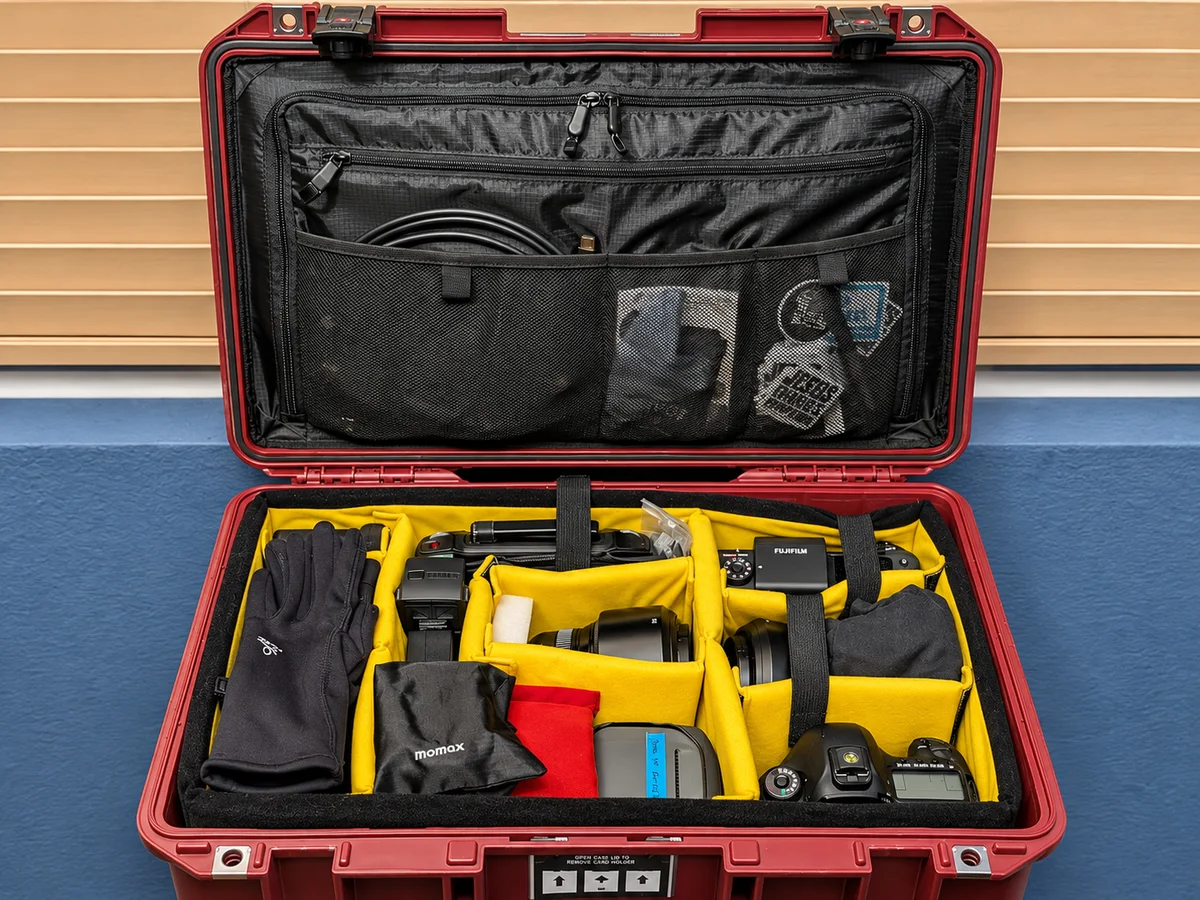
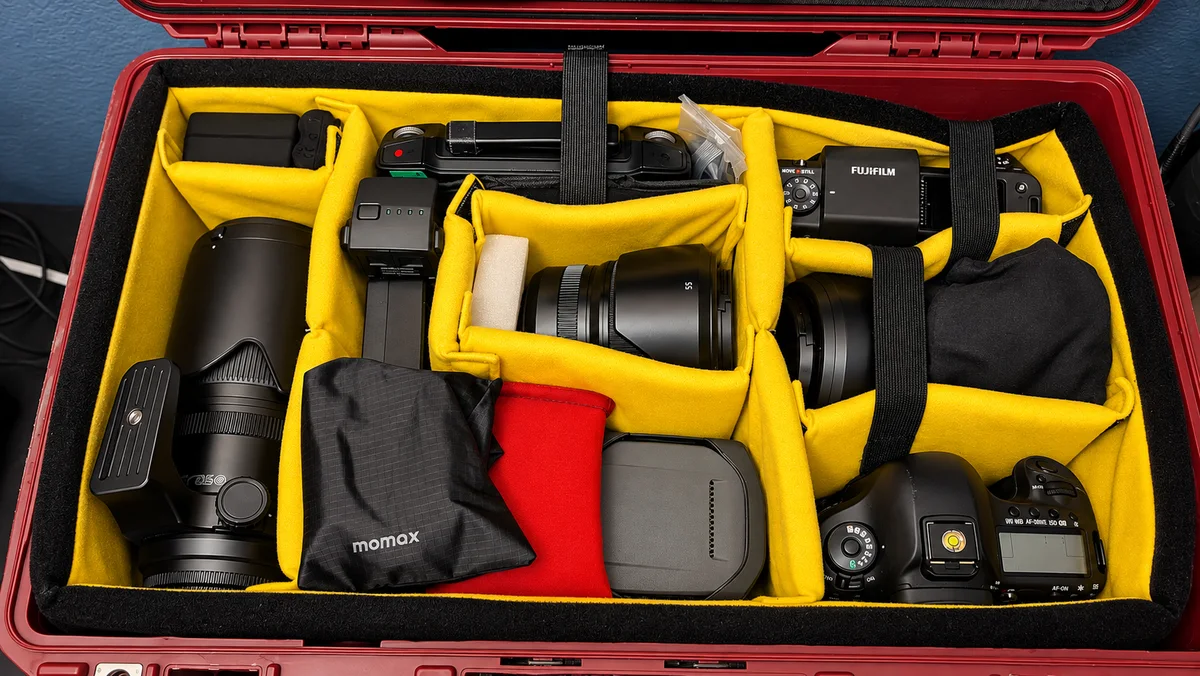
My Pelican Air case is the protected home for the larger camera-and-drone kit. The dividers keep the expensive pieces separated, and the lid pouches hold the things I need to build the setup once I arrive.
In the main compartment
- Fujifilm GFX 100 II: my primary camera.
- GF 20–35mm, GF 55mm, and GF 100–200mm: wide, everyday, and telephoto options.
- Canon 5D Mark III: my familiar Canon body. Depending on the job, one GF lens’s spot can instead go to my Canon EF 70–200mm or EF 16–35mm for the Canon setup.
- DJI Mavic 3 + DJI RC Pro, plus an extra drone battery.
- Fujifilm BC-W235 dual battery charger and a Canon battery charger for the EF-camera setup (Canon LC-E6).
- A spare Fujifilm NP-W235 battery and a spare Canon LP-E6N battery.
In the lid pouches
- HDMI-to-mini-HDMI cable, a fast data-transfer USB-C cable, and my Canon USB cable.
- BlackRapid dual-camera harness: mine has been with me for more than a decade.
- Holdland belt and a casual camera strap, so I can change how I carry the cameras to suit the situation.
- Sharpies, brand stickers for fun, and lens wipes.
The camera bodies are the expensive part, but the lid is full of the things that make the whole setup usable. For more about why I use the cameras and lenses, see my photography gear article.
I’ve also added gear clips inside the Pelican so small things on keychains or carabiners have somewhere to stay put.
2. The Peak Design backpack: work devices, media, and the day’s essentials
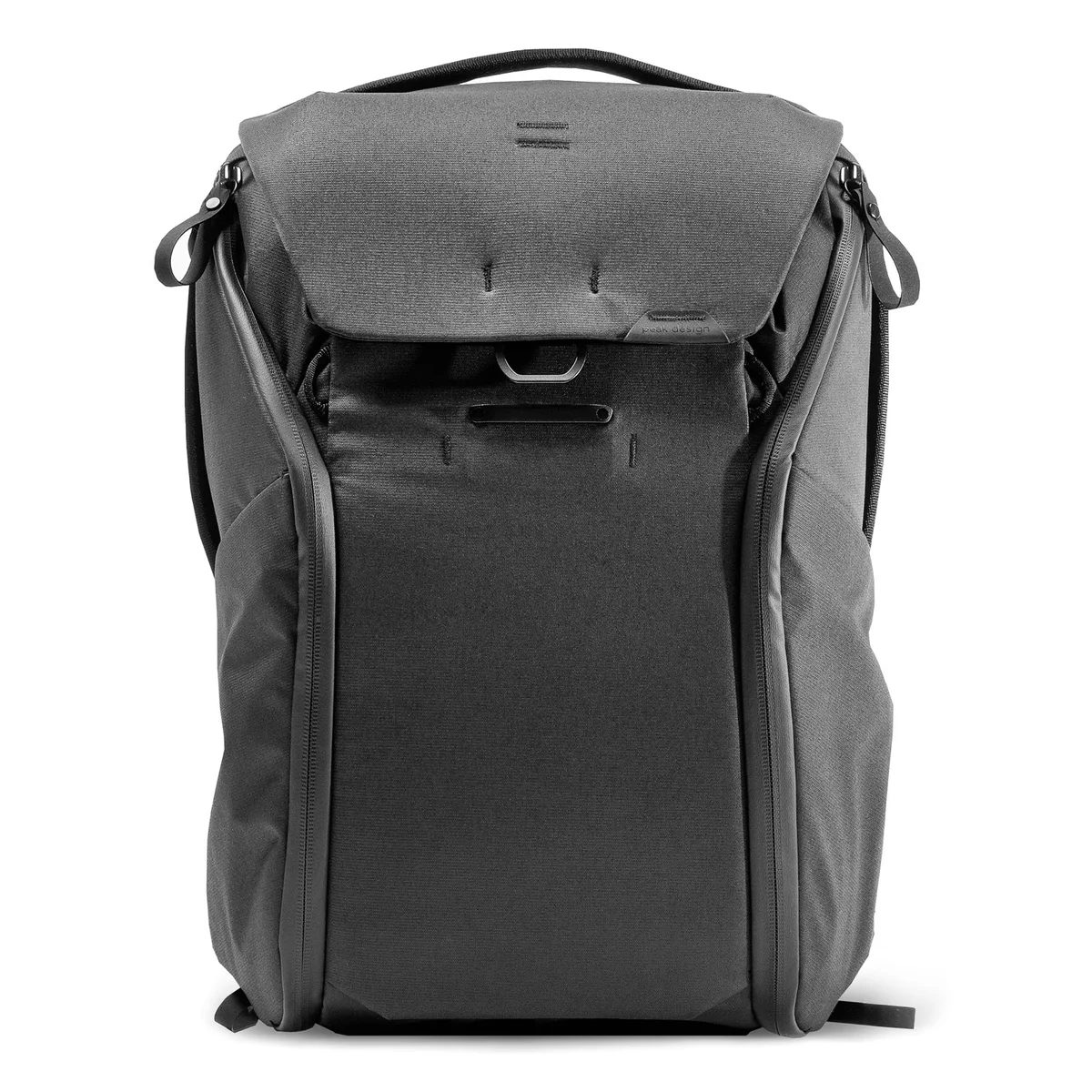
I use the Peak Design Everyday Backpack 20L. I am 5'4", and this size already gets plenty heavy. The goal is to organize the things I actually use, not find a bigger bag so I can carry more.
Gear clips for keys and earbuds
My spare office keys and earbuds have fallen out a few times when I turned my Peak Design backpack on its side to grab a camera or lens. I recently added these gear clips inside the backpack and my Pelican. Now I clip in anything on a keychain or carabiner and have one less thing to worry about when I open the bag.
Yes, I know the Peak Design backpack already has a key clip in one of the side water-bottle pockets. I like using those pockets for other things. :P
The devices and personal work kit
- Razer Blade 16 and iPad Air.
- ESV single-book Scripture Journals: a book at a time in a slim format. The Luke journal is one example from the series.
- Whatever leadership, business, or creative book I am currently reading—for example, Grit by Angela Duckworth. I keep more picks in books I recommend for leading people and doing meaningful work.
- DJI Osmo Pocket 3 with its carry case.
- A Bluetooth mouse.
The media kit—inside a repurposed DJI Mic sleeve
I use a DJI Mic carrying-case sleeve to house my memory cards and adapters. It is a repurposed pouch rather than a dedicated card organizer, and it keeps the little pieces together.
- A spare microSD card. SanDisk Extreme 1TB is the SanDisk option discussed in my accessories guide.
- Two CompactFlash (CF) cards and two CFexpress cards.
- A CFexpress reader, a CF reader, and the adapters I need.
CF and CFexpress are different formats, which is why both readers have a place in the kit. Having all of them together saves me from finding the card and then starting a second search for the thing that reads it. If you are shopping for readers, two options are the ProGrade Digital CFexpress Type B + SD reader and the UGREEN USB-C 4-in-1 reader for CompactFlash, SD, microSD, and Memory Stick.
Power without the Razer brick
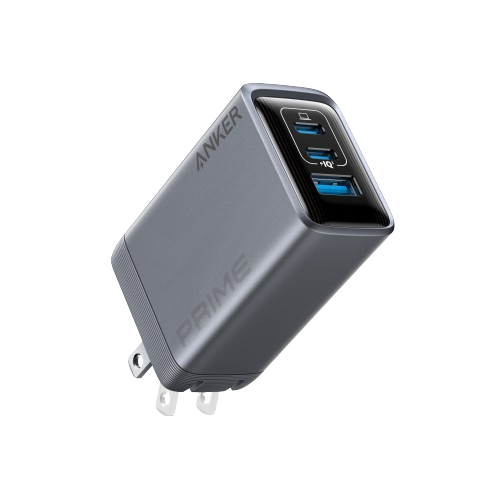
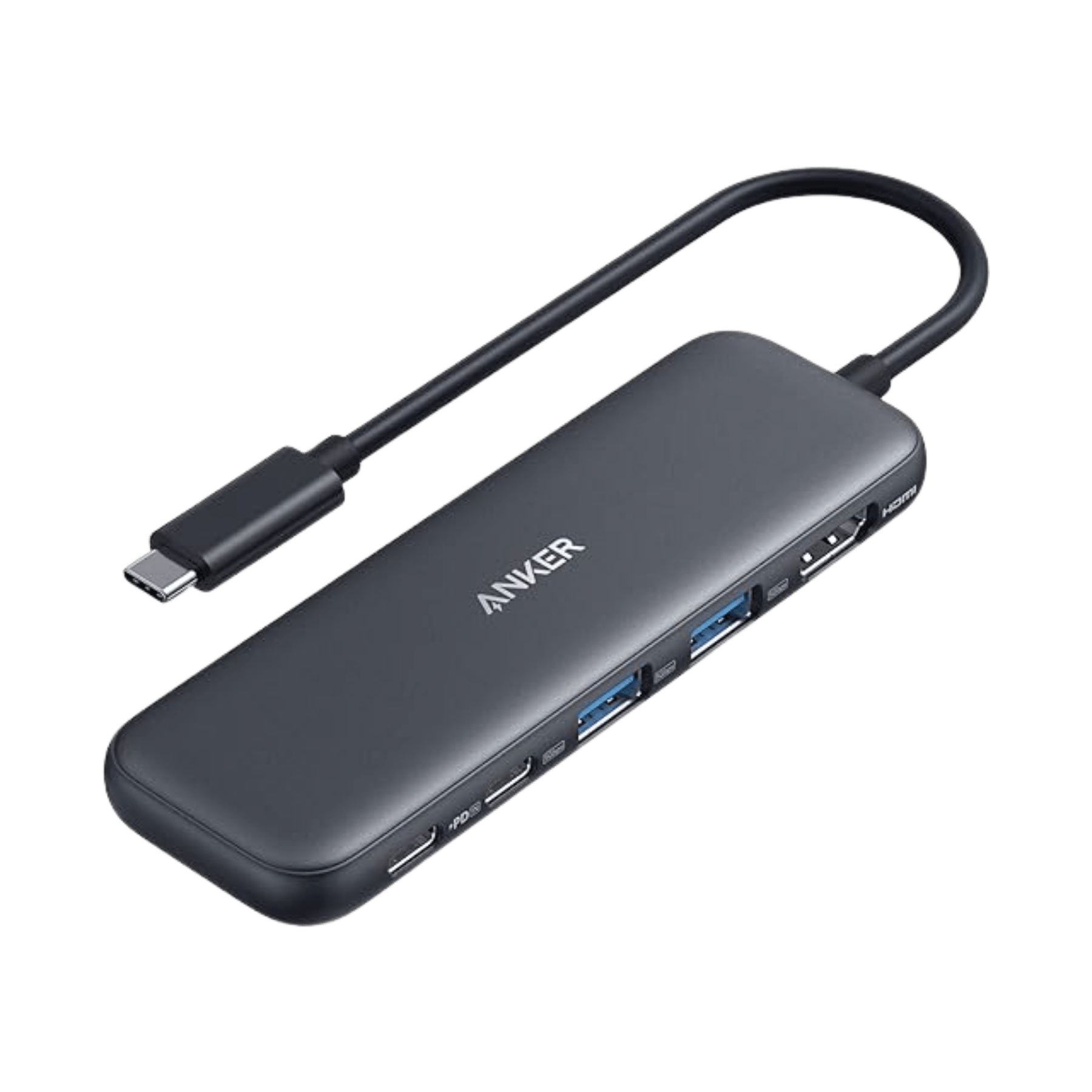
I removed the Razer power brick from this bag completely. For the work I do on the go, I charge over USB-C using my Anker setup: the Anker Prime 100W wall charger supplies the power, and the Anker 332 USB-C hub provides ports and power pass-through. The hub is not a power source on its own.
My favorite INIU Mini 10,000mAh 45W power bank and the sleeker replacement I also like are the portable-power options in my kit. The important thing is getting the charging setup I need without putting that enormous laptop brick back in the bag.
For the long days
- Biofreeze roll-on.
- Nuun tablets—the linked Energy version contains caffeine.
- Whatever my favorite snacks are at the moment.
For longer travel days I also carry things like my lint roller and blanket; those get their own space in the travel essentials article. Here, the point is keeping the work kit and the things that get me through the day together.
3. The ALPAKA: flight essentials, then a shoot-day swap
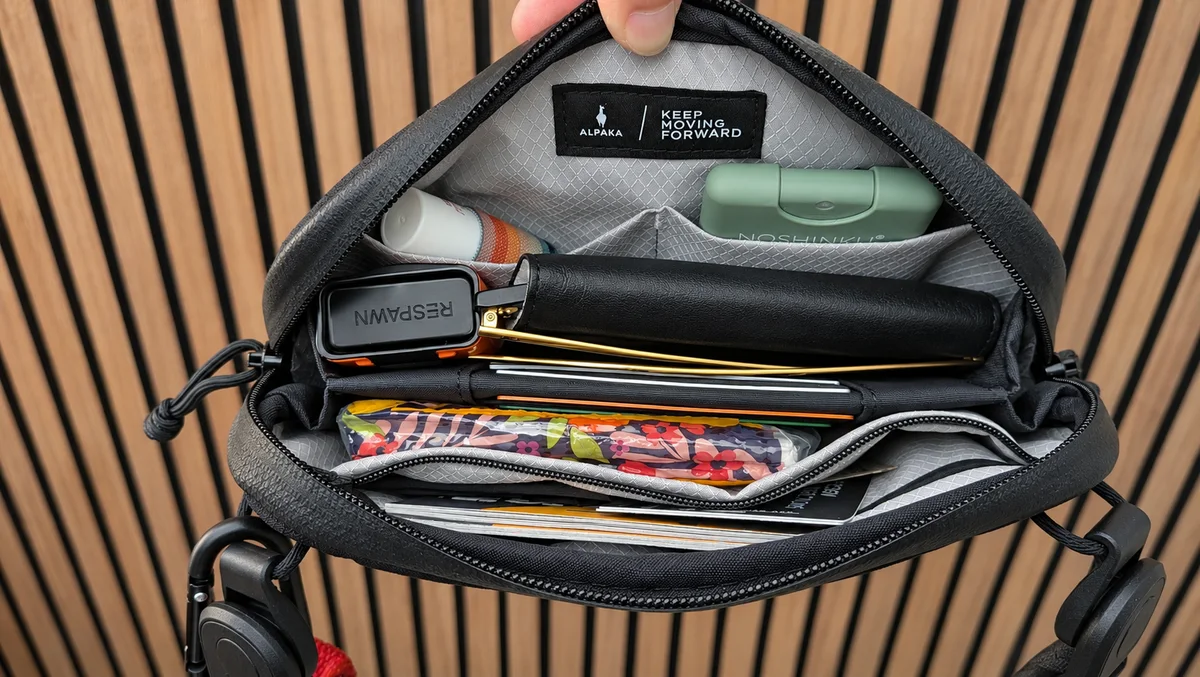
The ALPAKA Flight Pouch is my small, close-at-hand layer. I prefer the standard version’s material and structure over the Pro-style fabric I tried, which looked lumpy wherever it was not filled.
What is in it for travel
- Tissues: for flights, which are of course the only time I desperately, always need them.
- Noshinku pocket hand sanitizer and chapstick.
- RESPAWN mints in Watermelon Guava or Blackberry Vanilla. I personally can’t handle spicy anything, but my friends say the Mango Habanero is good too.
- My William Painter sunglasses in my Bristow Lens Jacket. The impact-resistant nylon lenses are why I only wear William Painter. I do a lot of outdoor shooting where my gear (and my face) can take a knock, and I want sunglasses that can handle that. A slim sleeve is what lets them fit in this little bag without a giant hard case taking over.
- Business cards and emergency cash.
- Two or three of Decision Point’s Jesus Changes Everything gospel booklets.
- My national park pass.
- The physical credit card I use for rental-car reservations, which includes rental-car coverage.
That last item has a story: I learned the hard way that I needed the physical card with me at the rental counter. Having the card details available was not enough for my reservation. Now the actual card goes in the pouch.
When I am shooting
I swap in a spare camera battery and memory cards. The flight loadout and the shoot-day loadout do not have to be identical; the point is that whatever I need repeatedly is right there instead of buried in the backpack.
4. The Domke: when the whole job is drone work
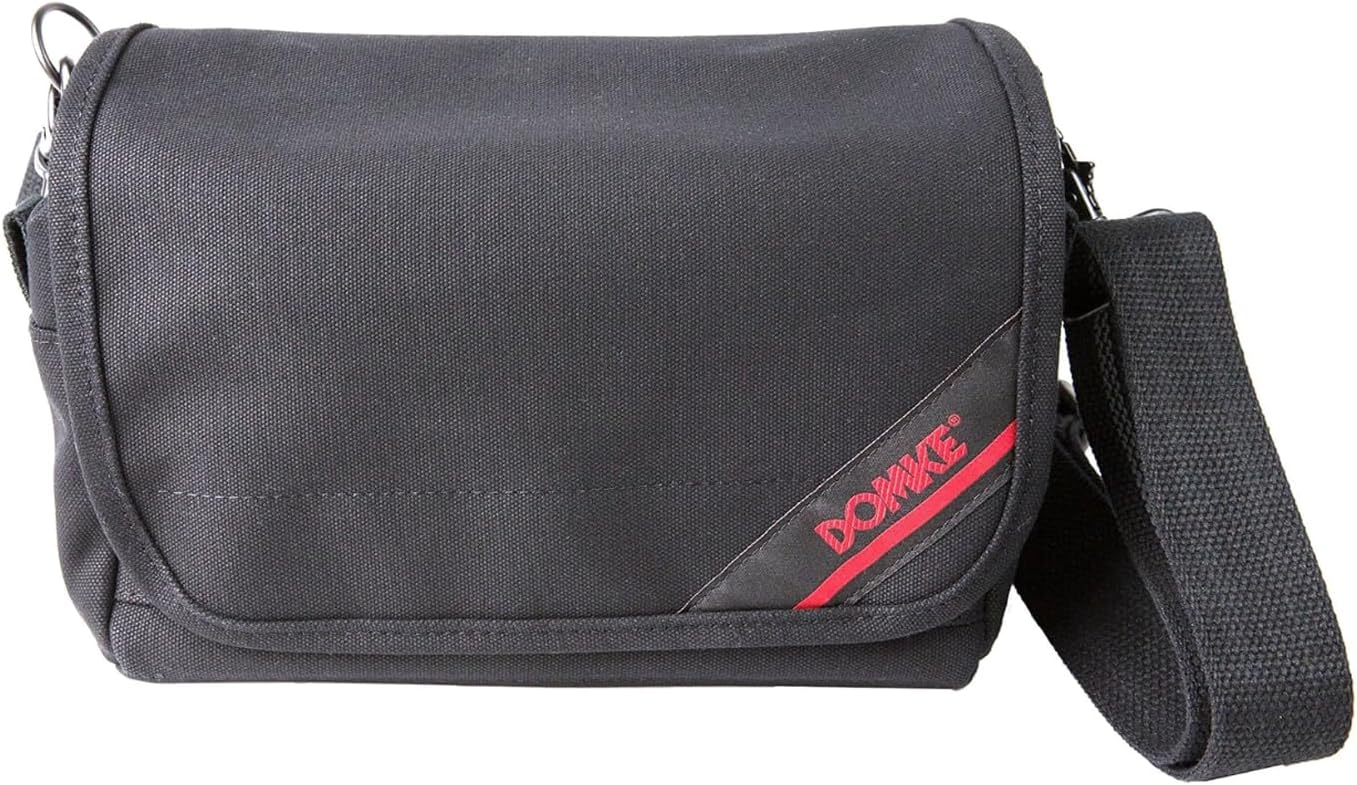
I do not bring the black Domke F-5XB bag that often. This is the setup for a full-on drone shoot, when my role is exclusively drone pilot—not photography, video, and one drone shot squeezed in somewhere along the way.
The dedicated drone-day extras
- LKTOP 200W three-way charger for the Mavic 3 series. Power becomes a much bigger logistical problem when flying is the whole assignment.
- DJI RC as a spare controller, including the times I cannot charge the RC Pro fast enough to keep using it.
- Spare cables and spare propellers.
How I wear the bag and controller
I removed the Domke’s original shoulder strap and attached that strap to the RC Pro controller instead, using these iMusk folding lanyard eye-hook screws.
The Domke bag itself clips to my Think Tank Thin Skin belt with two carabiners. That belt also carries a Peak Design Capture clip and a bottle-neck clip with a carabiner—this is the style that holds a normal disposable water bottle just underneath its lid.
It is a very particular arrangement, but the parts have different jobs: the original bag strap supports the controller, while the belt carries the bag and the other things I want accessible in the field.
5. The checked suitcase: field extras, the event grab box, and clothes
The Domke bag usually travels to the location inside my checked luggage, then comes out for field use. My suitcase is currently a Traveler’s Choice; I am tempted by the Peak Design Roller Pro, but that is a possible future change, not something I already own.
This is also where the extra setup accessories go: spare clamps and my event grab box, alongside clothes, fancy clothes, and the other necessities.
The event grab box is a metal cash box I repurposed for the things an event somehow always needs: adhesives, magnetic strips, scissors, twine, and the rest of the little fixes. It is separate from the camera kit, but on a production day it can be just as useful.
The system matters more than the bag count
The Pelican protects the larger kit. The backpack carries the work devices and media. The ALPAKA puts the immediate essentials within reach. The Domke comes out for dedicated drone days, and the suitcase gets the extra setup gear to the location.
Honestly, the biggest improvement has been deciding exactly where everything goes and making that second nature. Once I stopped looking for my stuff, I could put that energy and brainpower into the actual job—an on-site shoot, an executive-level presentation, or headshots and interviews.
The goal is to stop thinking about the equipment long enough to focus on what matters. For the stories behind the little tools that remove those distractions, see small camera accessories that solve annoying problems.